

A bat colony leaves a trail, from the entry point they’ve been using for years, to the accumulation inside, to what’s left behind once they’re safely excluded. Here’s what that trail actually looks like on a real job, start to finish.
Finding the Entry Point
This entry sat between a log cabin wall and the freeze board, a common gap style on older mountain construction. The dark staining around the opening is bat urine and body oil, built up from repeated use over what was likely years, not weeks.

Confirming the Colony
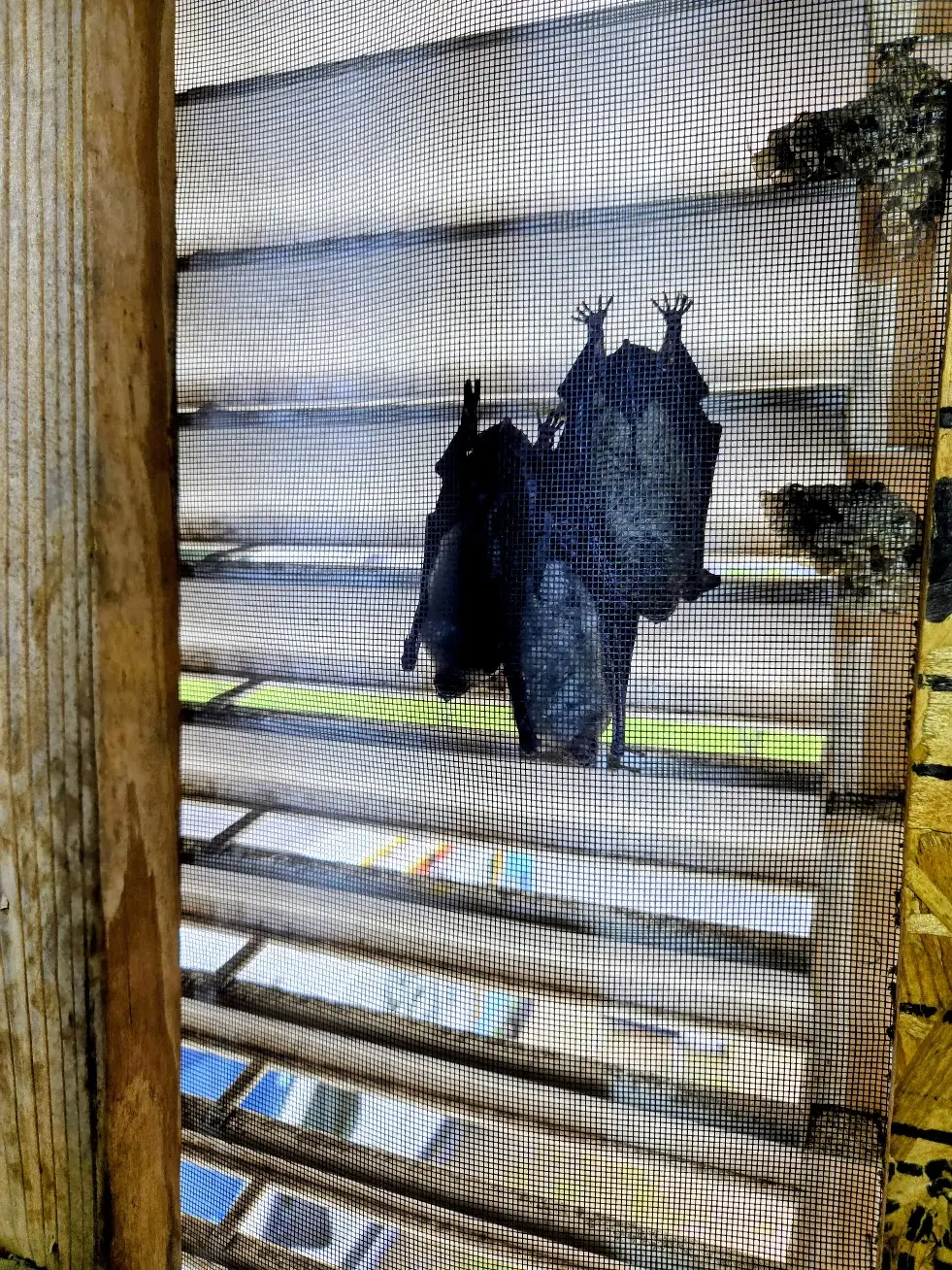
Before any exclusion work begins, we confirm what’s actually roosting and roughly how many. This gable vent held a small cluster, tucked tight against the vent screening where they’d find shelter and warmth.
The Exterior Sign Most People Miss
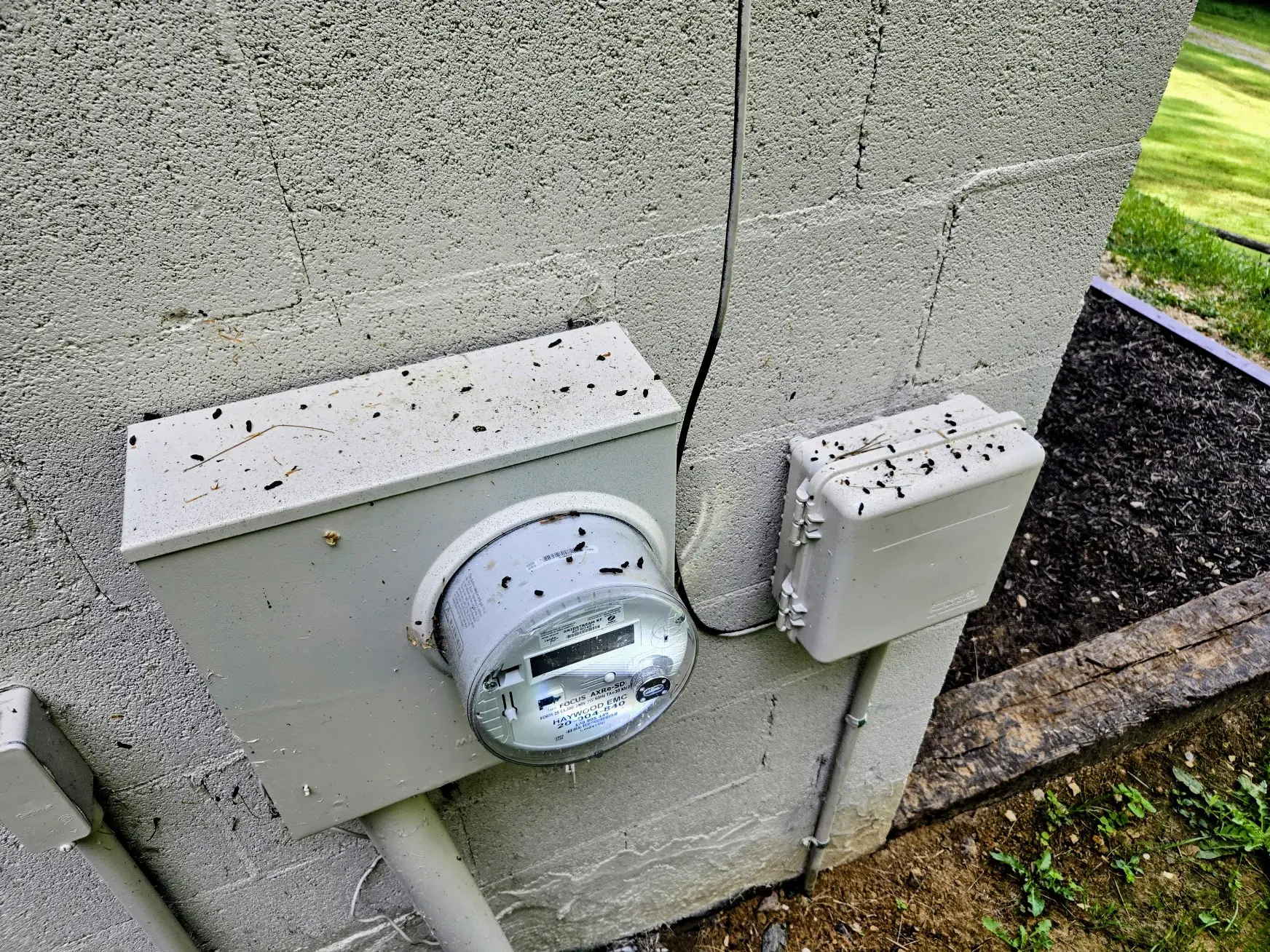
Guano doesn’t only accumulate inside. This utility meter sat directly below an active entry point, and the droppings on top of it were one of the clearest exterior signs on the whole property, visible from ground level if you know what you’re looking at.
Years of Accumulation
When a roost has been active for years without anyone addressing it, the accumulation inside the attic can be substantial. This is exactly the kind of buildup that makes dry cleanup methods dangerous, disturbing this much guano without wet-misting it first would send a significant amount of fungal spore material into the air.

The Result
Wet-misted, HEPA-vacuumed, and treated with a bio-enzymatic deodorizer that breaks down the scent trail rather than just masking it. The difference isn’t just visual, it’s the removal of the exact odor cues that would otherwise draw the next colony back to the same spot.

If you’re seeing any of these signs, exterior staining, droppings near a utility fixture, or a musty smell in the attic, our bat exclusion page covers the full process, and our attic restoration page covers what a full decontamination involves.
Go On, Git! is NWCOA Bat Standards Certified, a national credential from the National Wildlife Control Operators Association built specifically around the guano remediation and exclusion technique shown above.
Begin with a Wildlife Safety Assessment
Every project starts with a detailed $149 Wildlife Safety Assessment and Consultation. Our licensed Wildlife Control Agents perform a safety walk-through of your property, deploy thermal imaging to check nesting spaces, and deliver a custom structural sealing proposal. The $149 fee is credited 100% back toward your exclusion service.