


Humane Groundhog Removal & Exclusion
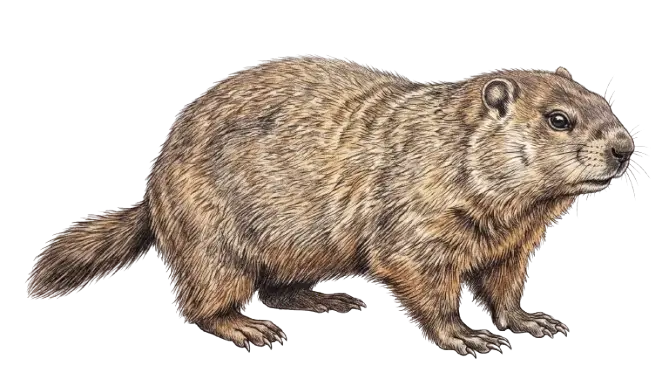
Groundhogs, also called woodchucks, dig deep beneath decks, sheds, and foundations, and the burrow you can see is rarely the whole story. Go On, Git! addresses the full burrow system, not just the visible entrance, so the exclusion actually holds instead of getting re-dug from a side tunnel a few weeks later.
Why the Visible Burrow Isn’t the Whole Problem
A groundhog burrow system typically runs 15 to 25 feet underground with multiple entrances, a main opening plus one or more hidden “plunge holes” used as quick escape routes. Sealing only the entrance you can see leaves the rest of the system, and the animal, fully intact:
- Hidden Secondary Entrances: Plunge holes are often tucked in tall grass or under brush well away from the main den, and they’re easy to miss without a full property walk.
- Foundation and Slab Risk: Burrows dug near a foundation, deck footing, or slab can undermine the structure over time, which is a bigger issue than the burrow itself.
- Seasonal Timing Matters: Groundhogs hibernate from roughly November through February, so the exclusion window and the animal’s activity level both shift with the season.
Our Full-System Exclusion Approach
We map the complete burrow system first, main entrance and every plunge hole, before touching anything. Once the animal has safely left through a one-way door, we backfill the tunnels and install L-shaped hardware cloth trenched below grade around the deck, shed, or foundation, so the space can’t simply be re-dug from a new angle.
STATE COMPLIANCE
ON-SITE RELEASE ONLY
Groundhogs cannot be relocated off-site in North Carolina. A Wildlife Control Agent must release a captured animal on-site or, where property damage has occurred, can obtain a depredation permit.
WHY WE LEAD WITH EXCLUSION
Because relocation isn’t an option, a permanent structural barrier is the only real long-term fix. One-way doors let the current resident leave on its own before we seal the system for good.
Why does the burrow keep coming back after I fill it in?
Groundhog burrow systems run 15 to 25 feet underground with multiple entrances, so filling the one hole you can see usually just leaves the rest of the tunnel system intact and reachable from another opening.
When are groundhogs least active?
They hibernate roughly November through February. That doesn’t change the exclusion approach, but it does mean burrow activity and visible signs slow down significantly during colder months.
Related reading: Groundhog or Woodchuck? (Same Animal), What’s Living in Your Crawlspace?, and How We Confirm a Crawlspace Exclusion Is Actually Working.
Begin with a Wildlife Safety Assessment
Every project starts with a detailed $149 Wildlife Safety Assessment and Consultation. Our licensed Wildlife Control Agents perform a safety walk-through of your property, deploy thermal imaging to check nesting spaces, and deliver a custom structural sealing proposal. The $149 fee is credited 100% back toward your exclusion service.