


If you’ve heard a soft chattering sound coming from your chimney, especially around dusk, you’re probably not dealing with a mammal at all. Chimney swifts are small, fast-flying birds that nest almost exclusively inside open, uncapped chimneys, and they come with a legal status that changes the whole approach compared to everything else on this site.
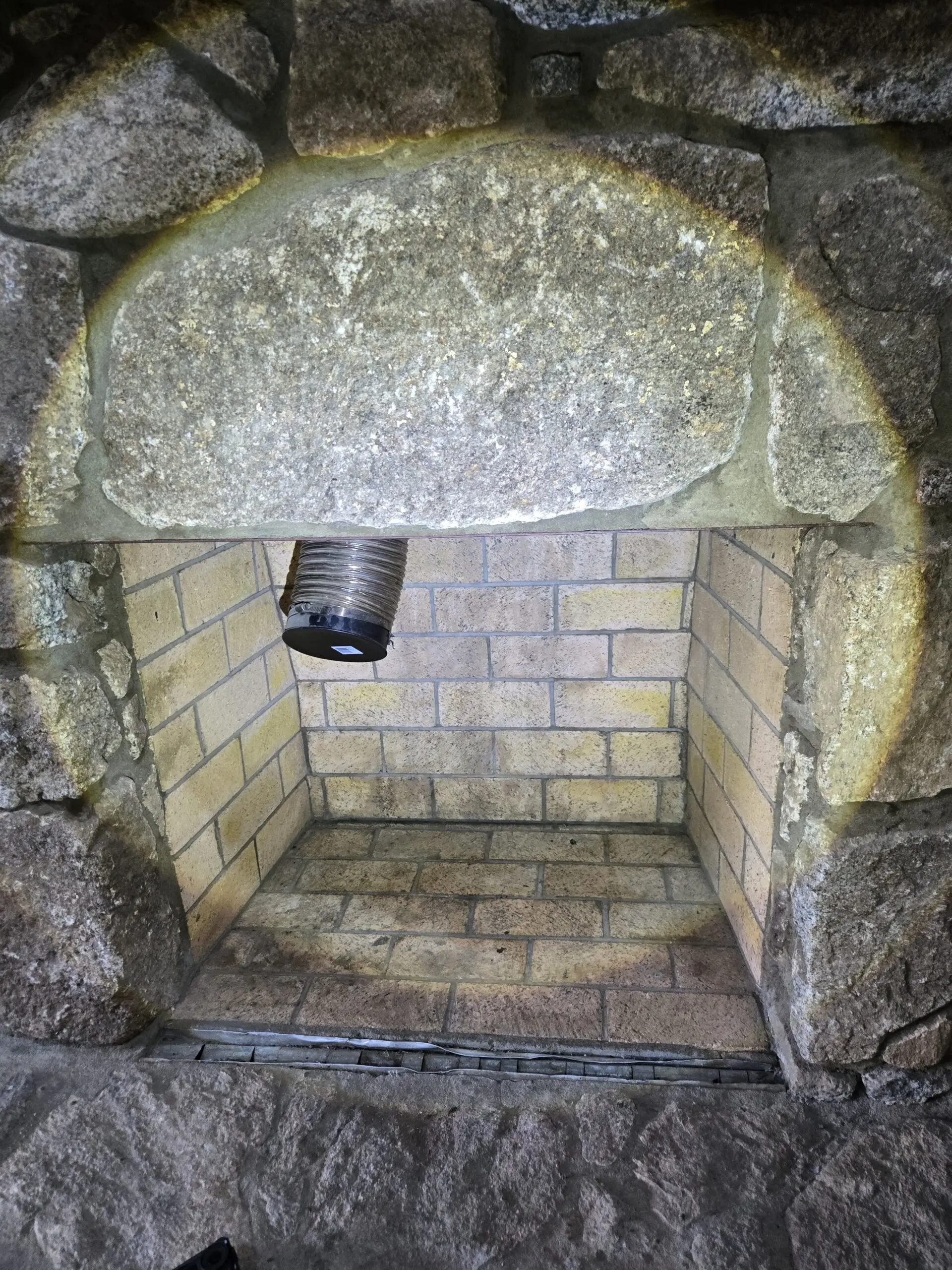
Why Chimneys Specifically?
Chimney swifts evolved to nest in hollow trees, which are increasingly rare across developed areas. Open masonry chimneys are an almost perfect substitute: dark, vertical, sheltered, and structurally similar to the hollow trunks they’d naturally use. An uncapped chimney is, from a chimney swift’s perspective, prime real estate.
The Legal Status That Changes Everything
Chimney swifts are protected under the federal Migratory Bird Treaty Act, on top of North Carolina’s own wildlife rules. That means they cannot be taken, possessed, or relocated without a federal permit, a different and stricter standard than any of the mammal species we handle. If action is ever needed before a nest empties naturally, it requires a federal depredation permit first, then a state permit on top of that. It’s not something a homeowner, or a typical contractor, can shortcut.
What You’ll Actually Notice
Most homeowners don’t notice chimney swifts until the chicks are a couple of weeks old and start calling for food, a soft, high chattering sound from inside the flue, usually loudest when an adult returns to feed them at dusk. By the time you hear it, the nest is already active.
Why You Can’t Just Cap It
Capping a chimney with an active nest inside would trap and kill the chicks. It’s illegal under federal law, and it’s something we’d refuse to do regardless. The correct move, and the only legal one, is to wait. Once you hear chicks calling, they’re typically only a few more weeks from fledging, and the nest empties naturally not long after.
What Happens After the Nest Empties
Once the flue is confirmed clear, a professional-grade, rust-proof stainless steel chimney cap keeps swifts, raccoons, and everything else out permanently, no repeat nesting seasons and no repeat calls. Our chimney swift capping page covers the full timeline and what to do if you hear that chattering sound right now.
Will chimney swifts come back every year if I don’t cap the chimney?
Likely, yes. An open, uncapped chimney is exactly the kind of site they favor, and once a pair has nested successfully there’s a good chance the same or a new pair reuses it the following season. A properly fitted cap, installed once the flue is confirmed clear, is what actually stops the cycle.
Can I just wait for chimney swifts to leave on their own?
They do migrate south for winter and the nest empties naturally each year after the chicks fledge, but the chimney stays just as open for next season unless it gets capped. Waiting for the current nest to empty is required by law, but it’s not a permanent fix on its own.
Begin with a Wildlife Safety Assessment
Every project starts with a detailed $149 Wildlife Safety Assessment and Consultation. Our licensed Wildlife Control Agents perform a safety walk-through of your property, deploy thermal imaging to check nesting spaces, and deliver a custom structural sealing proposal. The $149 fee is credited 100% back toward your exclusion service.