


Not every company that answers the phone for “bats in the attic” is actually allowed to do that work in North Carolina, and the ones that aren’t tend to show it in the repair. We get called out to fix the same handful of mistakes over and over: spray foam over an open gap, mothballs instead of an actual seal, and nobody checking whether bats were even still inside before the house got closed up.
Mistake #1: Spray Foam Where a Structural Seal Belongs
Spray foam is cheap and it looks finished from the ground, which is probably why it’s so common. It also isn’t a durable structural seal. A bat can work its way through a foam bead at a roofline or soffit intersection far more easily than most homeowners expect, and once the surface cracks or peels from UV exposure, whatever was sealed underneath is open again. Below is a roof return a previous company “fixed” with foam. The actual structural gap along the flashing was never closed, just covered over.
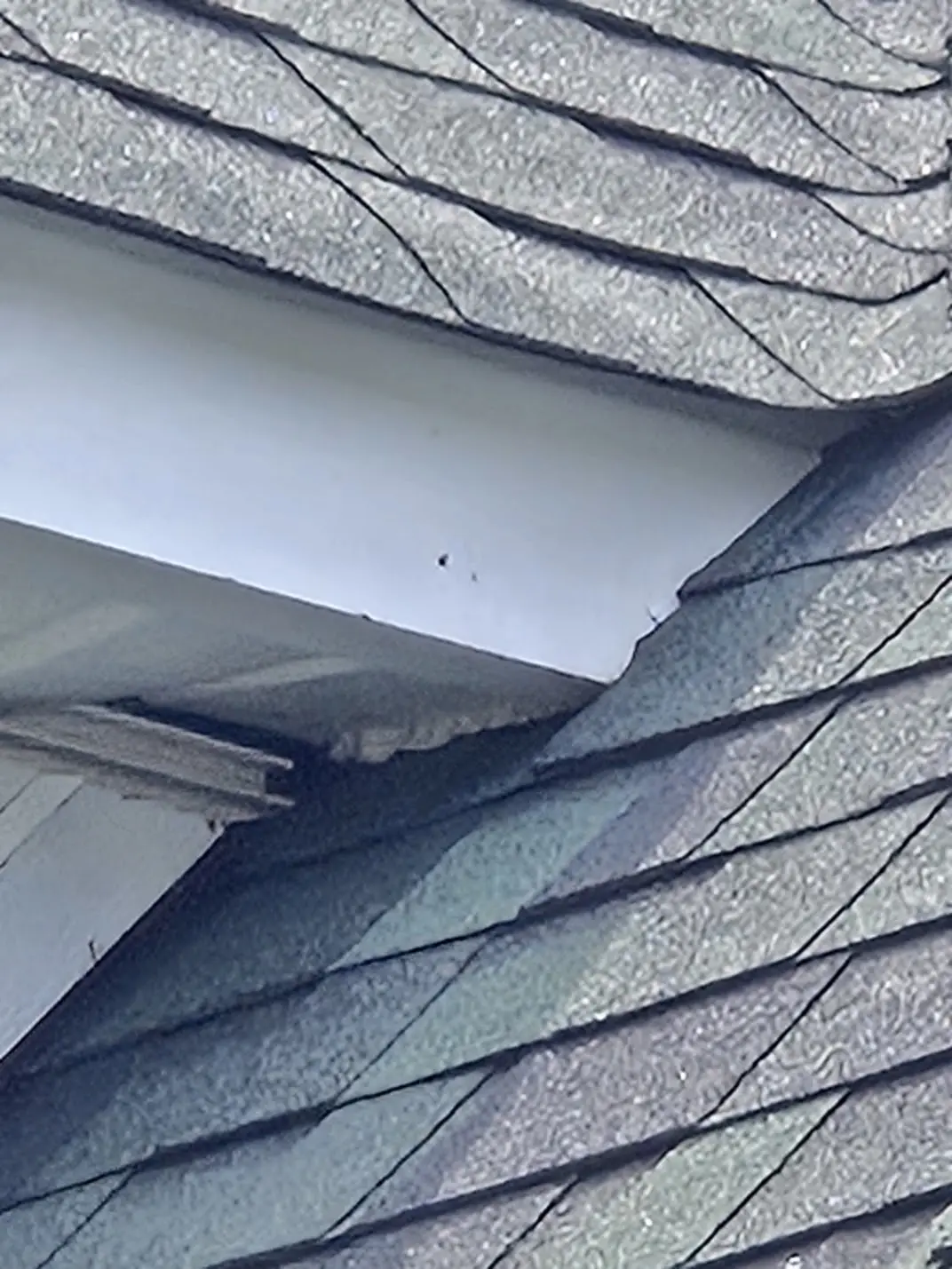
A permanent bat exclusion needs corrosion-resistant metal mesh or flashing fastened directly into the structure at every entry point. Foam bridging a gap that’s still open behind it isn’t a fix, it’s a delay. Our bat exclusion page covers the materials and one-way device process we actually use.
Mistake #2: Mothballs, Sound Machines, and Other Things That Don’t Work
Naphthalene mothballs and ultrasonic sound emitters get sold constantly as bat deterrents, and neither one holds up. An open attic has too much airflow for mothball vapor to ever reach the concentration that actually bothers a bat, so homeowners end up with a house that smells like a cedar closet and a colony that hasn’t moved an inch. Ultrasonic devices have the opposite problem: bats navigate by echolocation, which means they’re already extremely tuned to sound, and a colony that’s established a roost tends to habituate to a constant noise within days rather than leave because of it.
Neither product is registered with the EPA or the state as a wildlife repellent, for what it’s worth. They’re sold as a general nuisance deterrent, not as anything tested against bats specifically, and the gap between marketing and biology is where a lot of wasted money goes.
Mistake #3: Sealing the House Before Checking Who’s Home
This is the mistake that actually costs an animal its life, not just a homeowner’s money. Sealing every opening on a house without first confirming whether bats are roosting inside, and without confirming it isn’t pup season, can trap a colony in the structure with no way out. That’s a step that got skipped, not a technique that failed.
A real inspection means going into the attic, not just walking the exterior and looking for obvious gaps from the ground. Thermal imaging is one of the tools we use to confirm whether a roost is active before any sealing work starts.

Timing matters as much as the check itself. North Carolina prohibits bat exclusions and one-way valve installation from May 1 through July 31 to protect flightless pups, a rule we cover in detail in our bat moratorium post. A company that’s willing to seal an attic in June without checking for pups first is telling you something about how the rest of the job is going to go.
Mistake #4: A One-Way Device That’s the Wrong Fit
Even companies that do use a proper one-way exit device sometimes get the fit wrong. Bats need a specific, tight clearance to funnel through the netting or tube on the way out, but not so tight that they get stuck or injured trying to squeeze through. A device that’s too loose lets returning bats find the seam and work their way back in before the monitoring period is even over, which means the whole job has to start again. One that’s poorly fitted against the structure can leave a gap at the edges that bypasses the device entirely, so the bats never actually have to use it.
What a Compliant Inspection Actually Looks Like
Every potential entry point gets checked: gable vents, roof returns, soffit intersections, chimney flashing, dormers, and every place two rooflines meet. Not just the one gap a homeowner already noticed from the driveway.
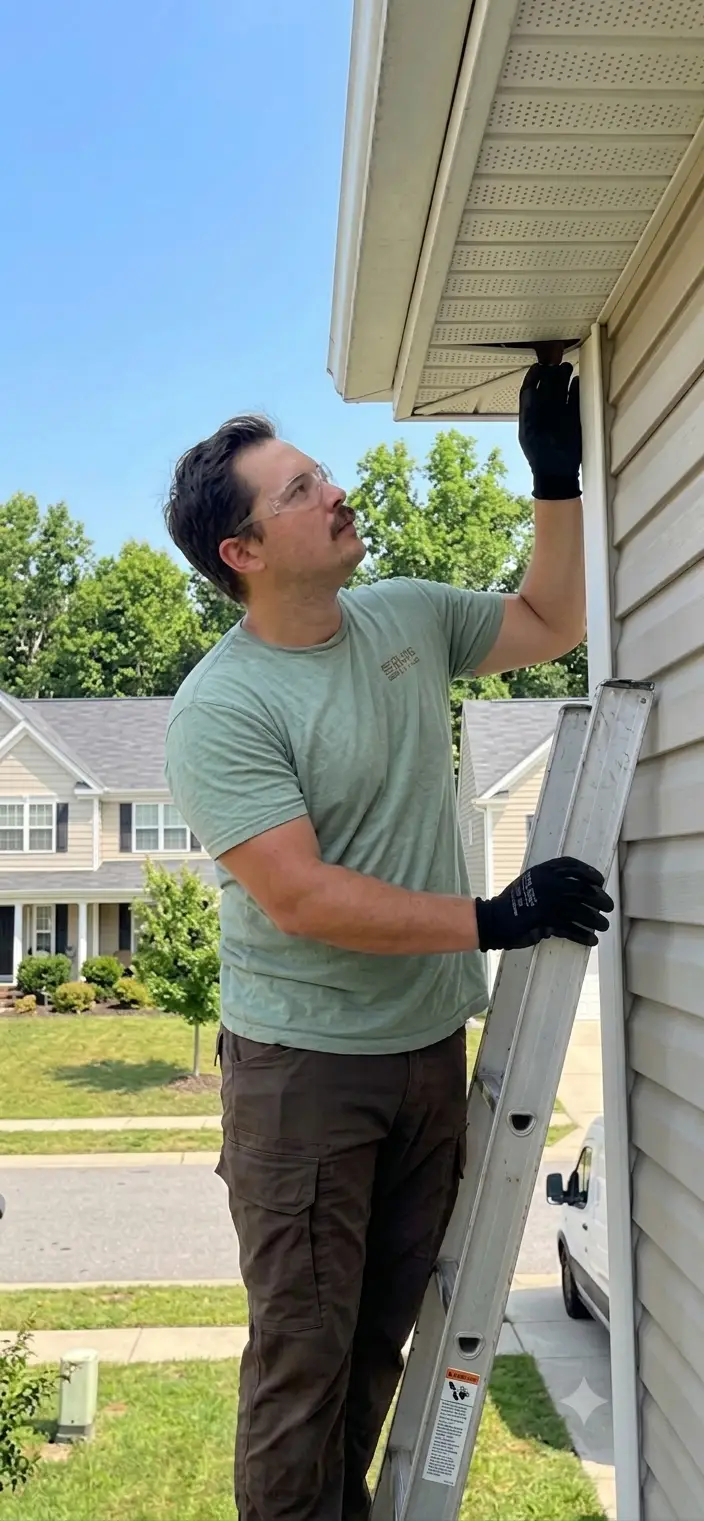
Go On, Git! is a member of the National Wildlife Control Operators Association (NWCOA) and is NWCOA Bat Standards Certified, a credential built specifically around bat biology, exclusion technique, and humane handling standards that a general pest control background doesn’t cover.

Confirming the Colony Is Actually Gone Before We Close Anything
Installing the one-way device isn’t the last step, it’s the middle one. We monitor it for several nights, usually watching the emergence at dusk, to confirm bats are actually leaving and nothing is still moving in or out through a gap we missed. Only once that’s confirmed does the device come off and the opening get permanently armored. Skipping that watch is how a company ends up sealing an animal inside without knowing it, and it’s a step that takes almost no extra time compared to the risk of getting it wrong.
Why This Isn’t Actually a Pest Control Company’s Call to Make
In North Carolina, wildlife eviction and exclusion work performed for compensation legally requires a Wildlife Control Agent (WCA) license issued by the NC Wildlife Resources Commission, not a structural pest control license. A standard pest control license, the kind that covers termites, roaches, and general household pests, doesn’t authorize exclusion work on a protected, non-game species like a bat. It’s a completely separate licensing body with its own exam and its own rules, and the two aren’t interchangeable.
Five Questions to Ask Before Anyone Gets on Your Roof
- Are you licensed as a Wildlife Control Agent through the NC Wildlife Resources Commission?
- Are you NWCOA Bat Standards Certified specifically, not just generally licensed for wildlife?
- What happens to the schedule if you find an active roost during pup season?
- What material actually goes over the gap once the bats are out, and is it fastened into the structure or just adhered to the surface?
- How do you confirm the attic is empty before you seal it for good?
A company that answers all five without hesitation is worth hiring. One that gets vague on the second or fifth question is usually the one whose work you’ll see photographed on a page like this one someday.
Worried a previous repair on your own house wasn’t done right? Our attic guide can help you figure out whether you’re even dealing with bats before you call anyone.
Can a regular pest control company legally remove bats in North Carolina?
No, not for compensation. Bat eviction and exclusion work requires a Wildlife Control Agent license from the NC Wildlife Resources Commission. A structural pest control license, the kind issued for termites and household insects, doesn’t cover wildlife species like bats.
Is spray foam ever okay to use around a bat entry point?
Spray foam can be part of a broader air-sealing job, but it isn’t a substitute for a structural bat seal on its own. The actual entry point needs corrosion-resistant metal mesh or flashing fastened into the structure, not just foam bridging the gap.
Do mothballs or ultrasonic devices actually get rid of bats?
Not reliably. Mothball vapor rarely reaches an effective concentration in an open attic, and bats tend to habituate to ultrasonic noise within days once a roost is established. Neither is registered as a tested wildlife repellent.
Begin with a Wildlife Safety Assessment
Every project starts with a detailed $149 Wildlife Safety Assessment and Consultation. Our licensed Wildlife Control Agents perform a safety walk-through of your property, deploy thermal imaging to check nesting spaces, and deliver a custom structural sealing proposal. The $149 fee is credited 100% back toward your exclusion service.