


An attic is dark, insulated, and rarely visited, which makes it exactly what a handful of Western North Carolina species are looking for. If you’re hearing movement above the ceiling or noticing a new gap at the roofline, here’s how to figure out what’s actually up there, and what kind of damage it might already be doing.

Bats: A Faint Squeaking at Dusk, and a Smell Before You See Anything
Bats get into gable vents, roof returns, soffit intersections, and gaps where flashing has pulled away, often through openings smaller than a homeowner would think possible, sometimes not much wider than a pencil. The giveaway is usually sound at dusk and dawn, a soft scratching or high, thin squeaking as the colony leaves to forage and returns before daylight, along with a musty, ammonia-like smell if a roost has been established for a while. See our bat exclusion page for how we confirm and handle an active roost, and note that North Carolina pauses all bat exclusion work from May through July for pup season.
Squirrels: Daytime Activity and Gnawing Sounds
Gray squirrels are the most common attic tenant we see, usually getting in through a chewed gap at a roof edge, fascia board, or gable vent. Unlike most attic wildlife, they’re active during the day, so scratching, running, or gnawing sounds in the late morning or afternoon point toward squirrels rather than something nocturnal. Our squirrel exclusion page covers what to look for at the roofline.
Southern flying squirrels are the exception to the daytime rule. They’re nocturnal, often move in family groups of a dozen or more, and tend to sound like a lot of small feet running at once rather than one animal pacing back and forth. If the noise sounds like more activity than one squirrel should make, our flying squirrel page explains why that’s actually a meaningful clue.
Raccoons: Heavy Movement at Night
Raccoons are big enough that the sound is hard to mistake once you’ve heard it, heavy footsteps, thumping, or what sounds like something being dragged across the ceiling, almost always at night. They typically get in through a damaged roof vent, a broken fascia board, or a chimney without a cap. A female raccoon denning in an attic to raise young is one of the more common calls we get in spring, and she’ll often defend that spot fiercely once she’s settled in. Our raccoon exclusion page covers how we confirm and handle that safely.
A Quick Way to Sort Out What You’re Hearing
If you only have a few seconds of listening to go on, timing and weight tell you most of what you need to know:
- Faint noise at dusk or dawn, plus a musty smell: likely bats.
- Light scratching and running during the day: likely gray squirrels.
- A chorus of small feet at night, more activity than one animal should make: likely flying squirrels.
- Heavy footsteps or thumping at night: likely a raccoon.
None of these are certain on their own, and more than one species can move through the same attic in different seasons. They’re a starting point for the phone call, not a diagnosis.
The Damage You Might Not See Yet
The sound is usually what gets someone to call, but by the time you can hear an animal in the attic, there’s often already accumulation you can’t see from the hatch. Guano and urine build up under a roost over time, compacting and staining insulation, and heavier accumulations can carry a real health risk if disturbed without the right protective equipment.
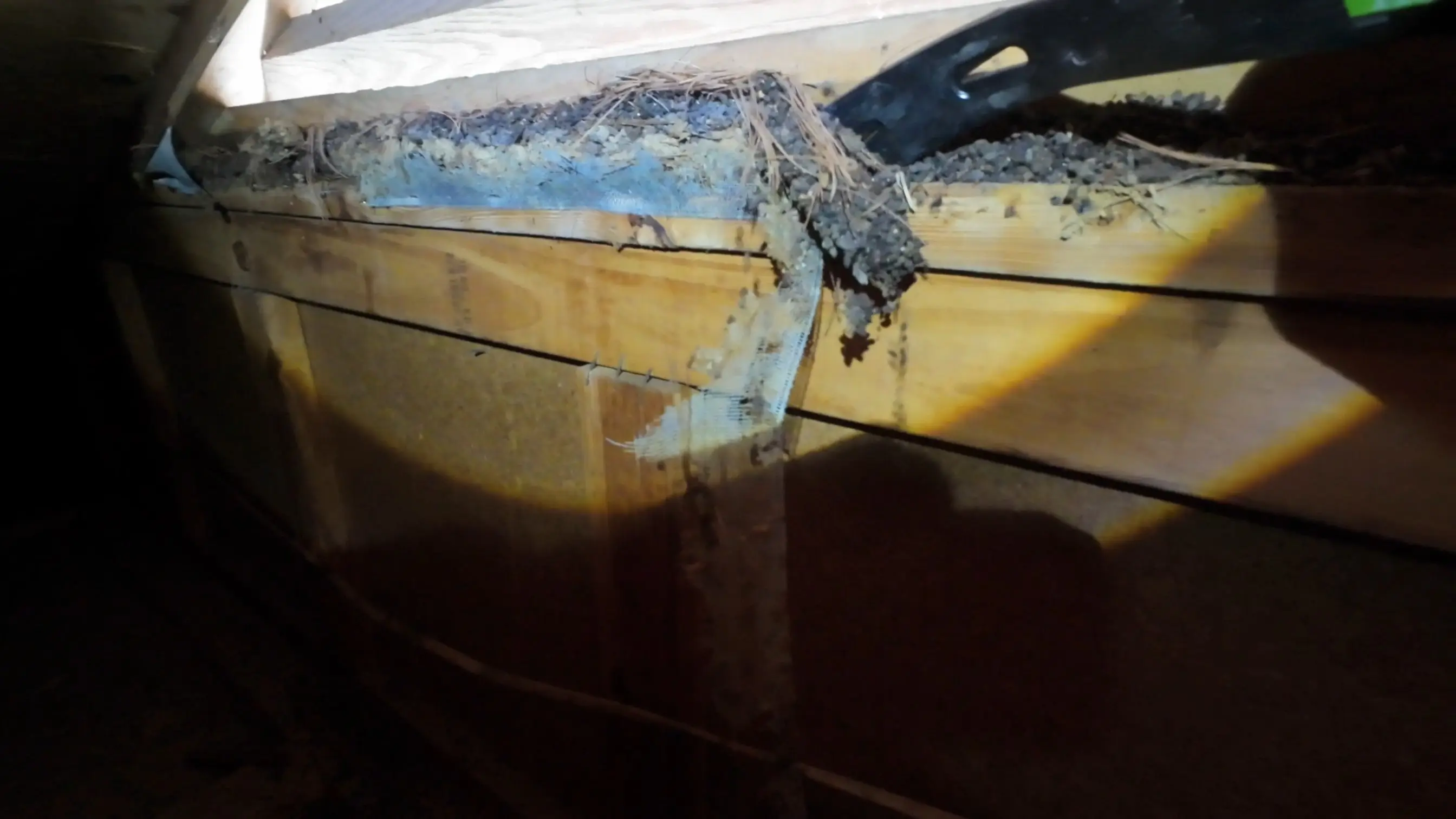
That’s what years of an unaddressed roost actually looks like under the insulation. Beyond the biological side, chewed wiring, compressed or soiled insulation, and gnawed framing or soffit material are all common once an animal has had unrestricted access to an attic for more than a season. Chewed wiring in particular is worth taking seriously, it’s a documented fire risk, not just a repair cost.
When Attics Fill Up Fastest
Two stretches of the year account for most of the calls we get. In fall, as temperatures drop across the mountains, squirrels and raccoons start actively looking for a warm, dry place to spend the winter, and an attic with even a small gap is an easy find. In spring, it’s less about weather and more about young: female raccoons and squirrels look for a secure, hidden spot to den and raise a litter, and an established attic access point from the year before is often the first place they check. Bats follow their own separate calendar tied to the May through July moratorium, arriving in spring to roost and raise pups before dispersing again in fall.
A Simple Checklist Before You Call Anyone
- Walk the exterior roofline and note any gaps, chewed fascia, or damaged vents, but don’t climb up to inspect them yourself.
- Note the time of day you hear activity, and whether it sounds like one animal or several.
- Check for staining on the soffit or fascia underneath a suspected entry point, a common sign of repeated use.
- Don’t seal any opening yourself until you know whether something is still using it. A sealed animal inside the structure is a much bigger problem than an open gap.
What We Actually Do
A full inspection covers the entire roofline and attic, not just the spot where the sound is loudest, since most animals leave more than one way in. Once every entry point is confirmed and the species is identified, humane one-way exclusion lets the animal leave on its own schedule without trapping it inside, followed by permanent structural sealing so nothing gets back in.
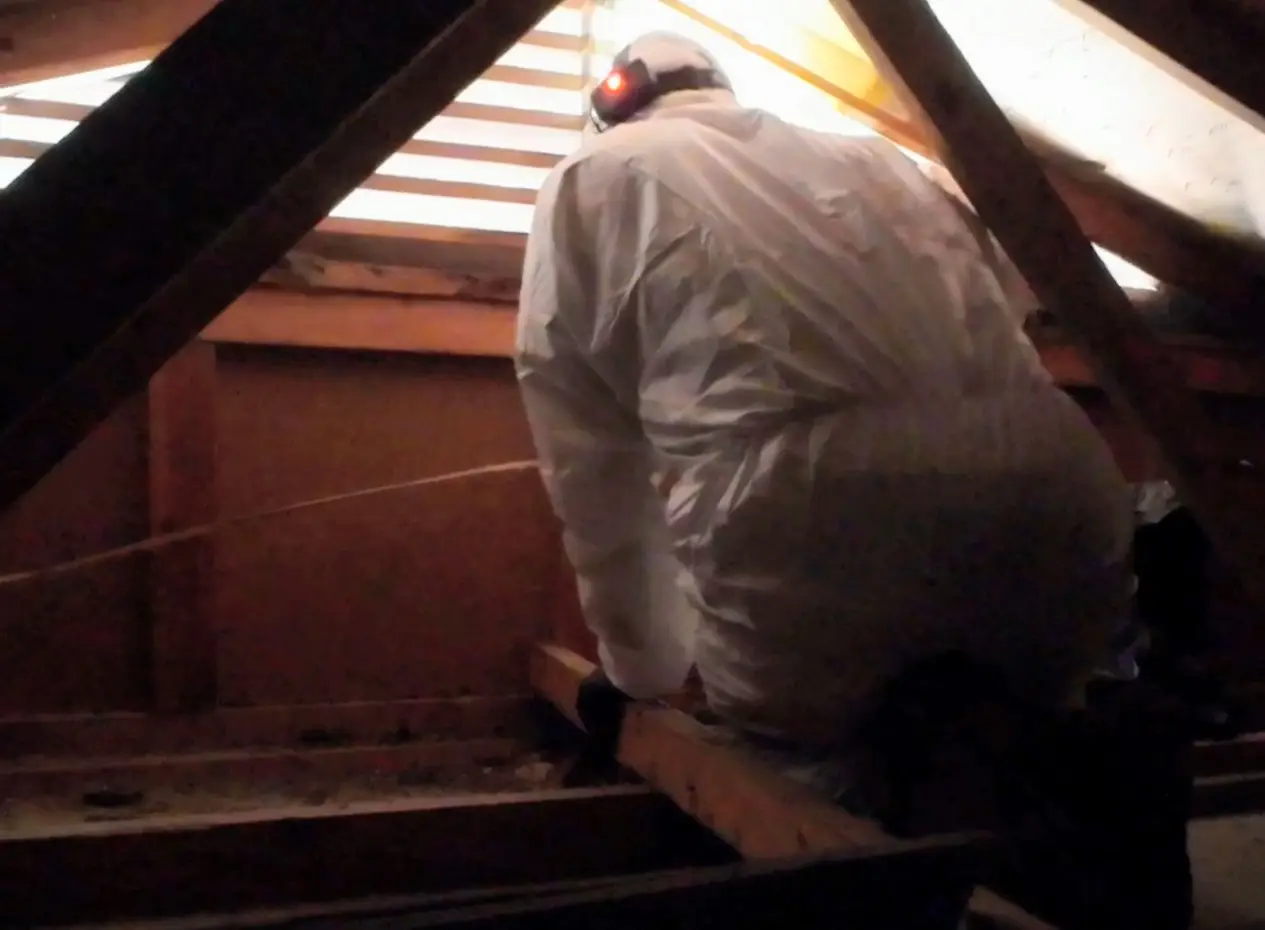
If there’s real accumulation once the animal is out, cleanup and sanitization is a separate step, done in full PPE, not something to attempt with a shop vac on a Saturday. Our attic restoration page covers what that process involves, and our guano cleanup before and after post shows what a real job looks like start to finish. If a bite, scratch, or direct contact with any animal is part of the story, our rabies guide covers what to do next.
How do I know if the animal in my attic is actually gone?
Sound alone isn’t reliable, since young animals go quiet for stretches and a parent may leave to forage for hours. A proper exclusion uses a one-way device and a monitoring period, usually several nights, to confirm nothing is left before any opening gets sealed for good.
Can I just seal the entry hole myself once I stop hearing noise?
We don’t recommend it. If an animal, especially a mother with young, is still inside when the opening closes, you’re left with a much worse problem: a trapped animal that can’t get out, and eventually a decomposition and odor issue inside the structure.
Begin with a Wildlife Safety Assessment
Every project starts with a detailed $149 Wildlife Safety Assessment and Consultation. Our licensed Wildlife Control Agents perform a safety walk-through of your property, deploy thermal imaging to check nesting spaces, and deliver a custom structural sealing proposal. The $149 fee is credited 100% back toward your exclusion service.